
The Law of Moses, found in the Torah—the first five books of our Old Testament—is traditionally said to contain 613 commandments: 248 positive (“dos”) and 365 negative (“don’ts”). Among these laws, there was a longstanding debate among the rabbis about which commandment was the greatest. Therefore, though the Pharisee who posed this question to Jesus was testing Him, it was also likely a sincere inquiry. Jesus certainly perceived the testing nature of the question, but He also recognized the genuine desire for truth. In response, He gently and directly offered a comprehensive answer, presenting a twofold summary that encompasses the entire Law and the prophets: “You shall love the Lord, your God, with all your heart, with all your soul, and with all your mind” and “You shall love your neighbor as yourself.” These two commandments do more than summarize the Law and the prophets, they also encapsulate the essence of the petitions in the Lord’s Prayer. Once we acknowledge God as our Father, we pray, “Hallowed be Thy name” and “Thy Kingdom come.” These are the highest petitions we can make. To hallow God’s name is to give Him His due. God is thrice holy—holy, holy, holy. Our greatest duty is to hallow His name and His very being by magnifying and glorifying Him. This is the highest way to love Him with all our heart, soul, and mind. In this life, we also turn to God in other ways. We ask for the grace to do His will, for His providential care, and for mercy and forgiveness. We pray to overcome trials and to be kept safe from the evil one. Each of these petitions, found in the Lord’s Prayer, is essential and finds expression throughout the Torah and the New Testament. Yet in the end, every petition we make must ultimately lead to the highest commandment: to hallow God’s name—to love Him with all we are—not merely because of what He does for us, but because of who He is. He is worthy of our love for His own sake, and it is our highest duty to offer Him that love. In Heaven, many of the commandments and petitions we now make will cease. We will not ask for forgiveness, since we will be purified and sin no more. We will not pray for daily bread—pointing to the Sacraments and God’s temporal care—because we will enter the eternal Banquet. Nor will we ask for strength to endure or receive protection from the evil one, because all trials will have been conquered in Christ. But we will eternally fulfill the greatest commandment and the first petition of the Lord’s Prayer by forever hallowing God’s name, crying out “holy, holy, holy,” and loving Him with a purified and perfected love.
Likewise, the second greatest commandment will also be fulfilled in Heaven, just as the second petition of the Lord’s Prayer—“Thy Kingdom come”—is fulfilled. The coming of God’s Kingdom is our eternal participation in His glory and holiness, united with all our “neighbors”—the angels and saints. Our love of God will overflow into love of neighbor, and our love for one another will reflect and participate in our perfected love for God.
Reflect today on the inseparable bond between love of God and love of neighbor, and the eternal nature of these commandments. Does your life bear witness to these two great commands? Does your daily prayer arise from and lead to this twofold love? Hallow God’s name not only with your lips, but also with your heart, soul, and mind. Allow that love to overflow to all people—especially those hardest to love—so that you show them the dignity and charity due to your neighbor, in anticipation of expressing that love forever in Heaven.
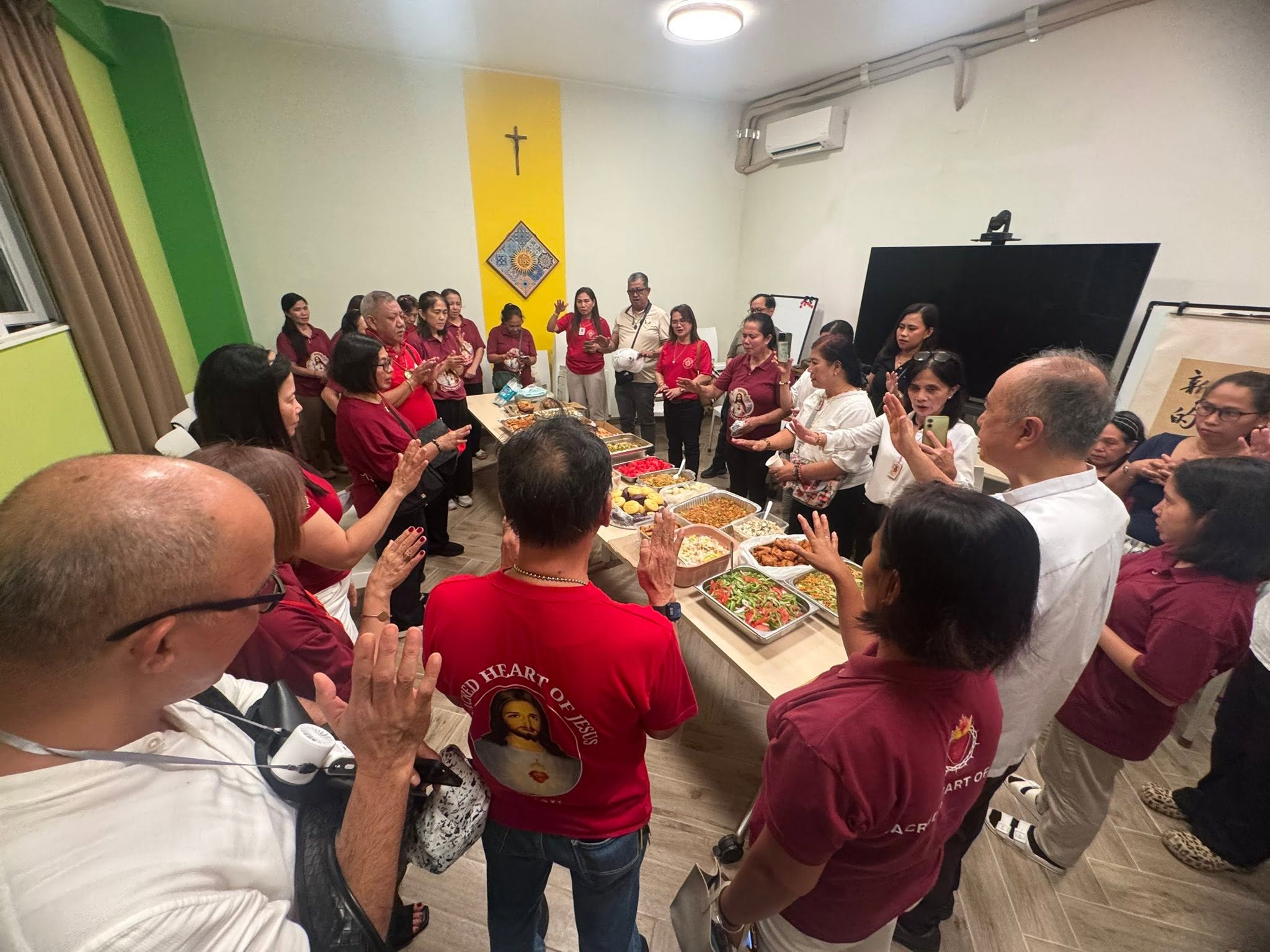
(Used with permission. www.mycatholic.life , Photo courtesy of: Pastoral Care for Filipino Migrants (PCFM) in Macau)