
Section

Faith & Life

28TH SUNDAY OT 9 YEAR A - The Guest Without a Garment

28TH SUNDAY OT 9 YEAR A - The Guest Without a Garment

There is a door we keep closed without knowing it. It is not a door of wood or iron. It is a door in the heart. And behind it are all the people we have decided to do not belong. The ones we have judged unworthy of our attention. The ones we have dismissed as unimportant. The ones we have quietly excluded from our circle, our conversation, our concern.
24TH SUNDAY IN ORDINARY TIME (YEAR A) – Exponential Mercy

24TH SUNDAY IN ORDINARY TIME (YEAR A) – Exponential Mercy

Jesus tells this parable in response to Peter, who asked, “Lord, if my brother sins against me, how often must I forgive? As many as seven times?” Peter likely thought he was being generous. But Jesus invited him to go far beyond what he imagined, responding, “I say to you, not seven times but seventy-seven times.”

23RD SUNDAY IN ORDINARY TIME (Year A) – The Joy of Reconciliation

23RD SUNDAY IN ORDINARY TIME (Year A) – The Joy of Reconciliation

When someone sins against us, especially in a grievous way, anger and condemnation can quickly arise as strong temptations. Our natural sense of justice often takes over, and we may find ourselves rationalizing a response rooted in judgment rather than compassion. In today’s Gospel, however, Jesus offers the much better path—to seek reconciliation, not division.

CALM IN CHAOS: St. Teresa of Avila’s Letters to Her Friends in 1576

CALM IN CHAOS: St. Teresa of Avila’s Letters to Her Friends in 1576

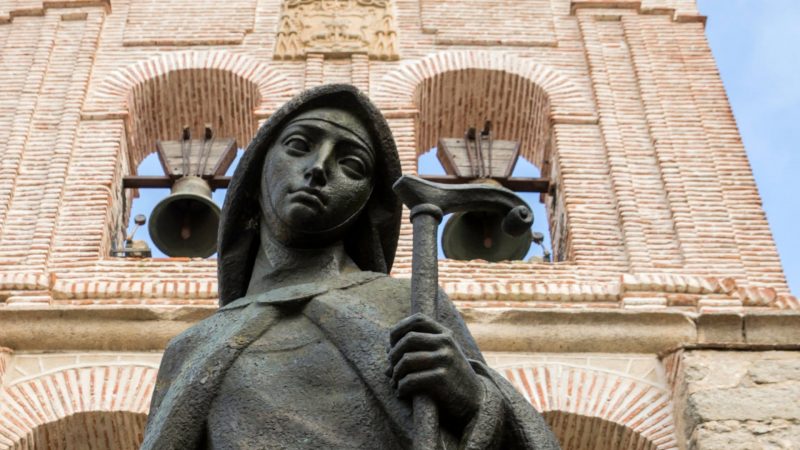
Back to school, back to work. Stressful situations inevitably arise, and though we often foresee them, our hearts are still easily shaken and our minds left without peace. We turn to prayer, yet find ourselves unable to focus because unresolved problems weigh heavily upon us. Today, we look at a few of St. Teresa of Avila’s letters to shed light on how spirituality can help with de-stressing.

19th Sunday in Ordinary Time ( Year A) – WALKING ON WATER !

19th Sunday in Ordinary Time ( Year A) – WALKING ON WATER !

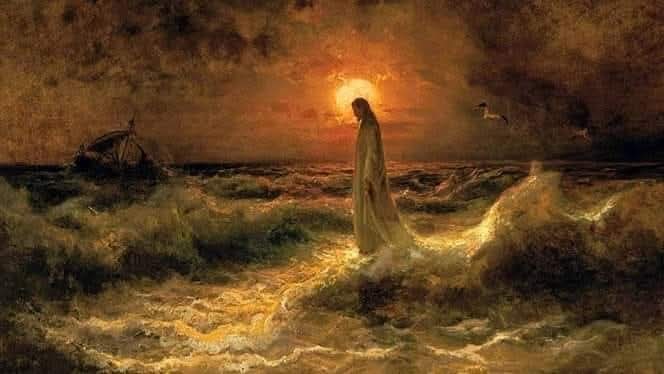
The miracle of Jesus walking on the water, recorded in three of the Gospels (Matthew 14:22–36; Mark 6:45–56; John 6:16–21), came on the heels of His miraculous feeding of the 5,000 with only five loaves of bread and two fish (Matthew 14:17). But it was the miracle of Jesus walking on the water that, more than any other, convinced Jesus’ disciples that He was indeed the Son of God (Matthew 14:32–33).

18th Sunday in Ordinary Time (Year A) – God’ Providential Care

18th Sunday in Ordinary Time (Year A) – God’ Providential Care

In the Gospels of Matthew and Mark, there are two distinct miraculous feedings of large crowds. Today’s Gospel depicts the first one, given primarily to Jewish people near the Sea of Galilee. Five thousand men (not counting women and children) were fed from five loaves and two fish, resulting in twelve baskets left over. This feeding of the five thousand is notably the only miracle of Jesus recorded in all four Gospels, underscoring its significance. Matthew and Mark also recount a second miraculous feeding—this time of four thousand people—in the largely pagan region of the Decapolis, using seven loaves and a few fish, with seven baskets left over.

17th Sunday in Ordinary Time (Year A) – A Priceless Discovery Awaits!

17th Sunday in Ordinary Time (Year A) – A Priceless Discovery Awaits!

In the first parable above, a person unexpectedly discovers a treasure buried in a field. Imagine that you take a metal detector with you while on a hike, simply curious about what might lie beneath the soil. Suddenly, the detector gives a strong signal. Expecting perhaps a rusted can or an old nail, you begin to dig. But as your shovel strikes something solid, you uncover an old chest. With growing anticipation, you lift it from the earth and open it—only to find it brimming with ancient and priceless jewels, gold and silver coins, and other precious items of immense worth.

16TH SUNDAY IN ORDINARY TIME (YEAR A) –  Transformed by God’s Word

16TH SUNDAY IN ORDINARY TIME (YEAR A) – Transformed by God’s Word

Yeast is small—invisible once it is worked into the dough. And yet, its influence is pervasive and powerful. This simple image—yeast worked into three measures of flour, causing it to slowly rise—reveals that the Kingdom of Heaven is built quietly, almost imperceptibly, from within.

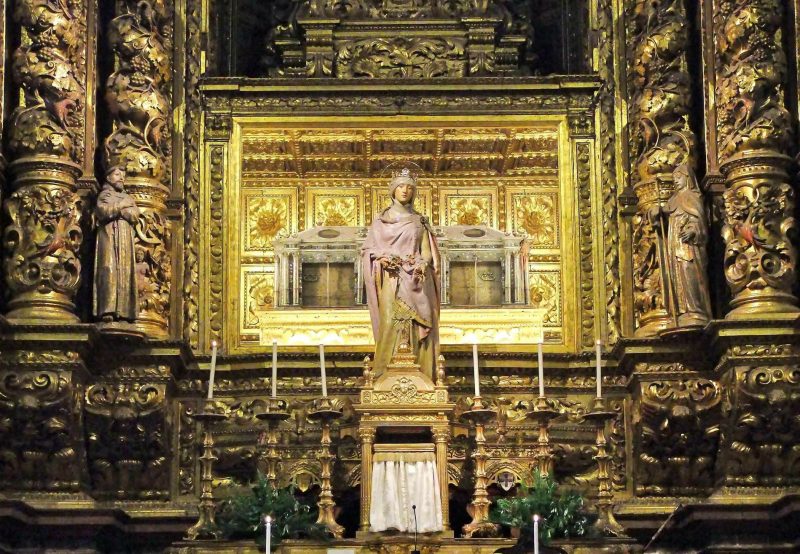
DEVOUT QUEEN AND PEACEMAKER – Saint Elizabeth of Portugal.

DEVOUT QUEEN AND PEACEMAKER – Saint Elizabeth of Portugal.

Elizabeth was the daughter of King Peter III of Aragon and of the saintly Constancia. She was born in 1271, and named after the holy landgravine of Thuringia, the sister of her grandmother. An angel of peace seemed to have come to the family with the birth of the child, because great joy over her birth reconciled her father and her grandfather, who had been living at variance with each other.

THE BROWN SCAPULAR – Our Lady of Mt. Carmel’s Sacramental Gift

THE BROWN SCAPULAR – Our Lady of Mt. Carmel’s Sacramental Gift

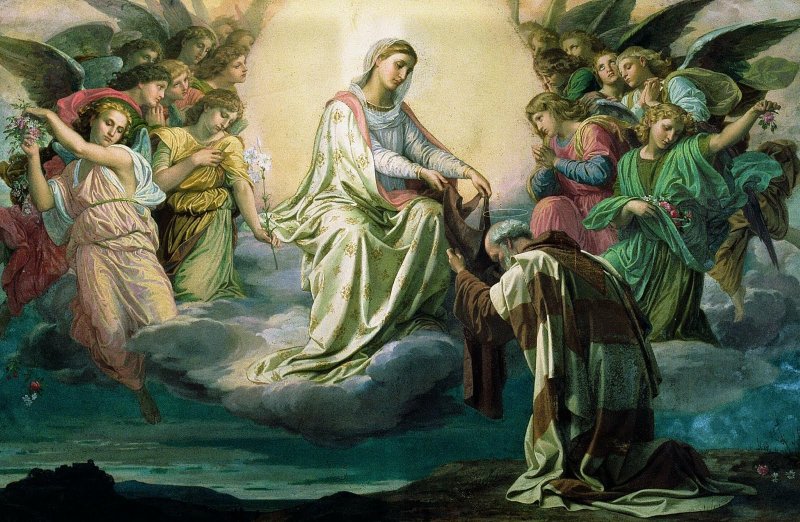
Every July 16, Catholics around the world celebrate the Feast of Our Lady of Mount Carmel. This date recalls Mary’s gift of the scapular to St. Simon Stock and renews the faithful’s devotion to her care. Parishes often hold enrolments on this day, marking the scapular not just as a personal devotion but also as an outward sign of the Faith and a symbol of communion in the mystical body of Christ, the Church.

15TH SUNDAY IN ORDINARY TIME – YEAR A – The Word of God Making  its Power Manifest in us

15TH SUNDAY IN ORDINARY TIME – YEAR A – The Word of God Making its Power Manifest in us

In today’s Gospel Jesus tells the parable of the sower to the crowd. Jesus was clearly concerned about how people are being affected and how they regard Scriptures. Jesus mentioned at least four situations using the fate of the seed after a sower sowed them. The growth of the seed depends so much on where it is sown. If it lands on path, rocky ground, or among the thorns, it will either not grow at all or will not reach its full growth or potential.

13TH SUNDAY IN ORDINARY TIME ( YEAR A)  – Hospitality Means an Open Heart

13TH SUNDAY IN ORDINARY TIME ( YEAR A) – Hospitality Means an Open Heart

One of the nicest things in life is to meet an open, friendly, hospitable person. You can usually tell from the quality of the handshake if you are dealing with such a person. He or she not only makes you feel welcome, but makes you feel that it is good to be you. Hospitality is the hallmark of a true follower of Christ.

HOPE IS A GOOD THING, MAYBE THE BEST OF THINGS – My Challenges in Living Holiness in the Middle of the World

HOPE IS A GOOD THING, MAYBE THE BEST OF THINGS – My Challenges in Living Holiness in the Middle of the World

Residing in a neighborhood where “Calçada Portuguesa” is part of the ambience, every day, as I walk through these streets, I notice the patterns—above all, the waves—which gently remind me: “I am a descendant of the sailors, that I can live a life with the same courage as them.” My heart is always moved when I read the early life of Saint Josemaria Escrivá—the way he dealt with all the difficulties, misunderstanding and doubts from others while living the Will of God faithfully through his life and actions.

OPEN YOUR BIBLE – Zechariah (3) – Looking at the Pierced One (Zech 12–13)

OPEN YOUR BIBLE – Zechariah (3) – Looking at the Pierced One (Zech 12–13)

Zechariah 12–13 is part of a larger section of the prophet’s book that speaks of God’s action in history. It begins with a reminder that God is Creator and unfolds around the phrase “on that day,” which signals a decisive moment in salvation history. Within this framework, three themes stand out: a) The nations fighting against Jerusalem b) The mourning for the one who is pierced c) The purification of God’s people

SOLEMNITY OF CORPUS CHRISTI – The Fragile Body

SOLEMNITY OF CORPUS CHRISTI – The Fragile Body

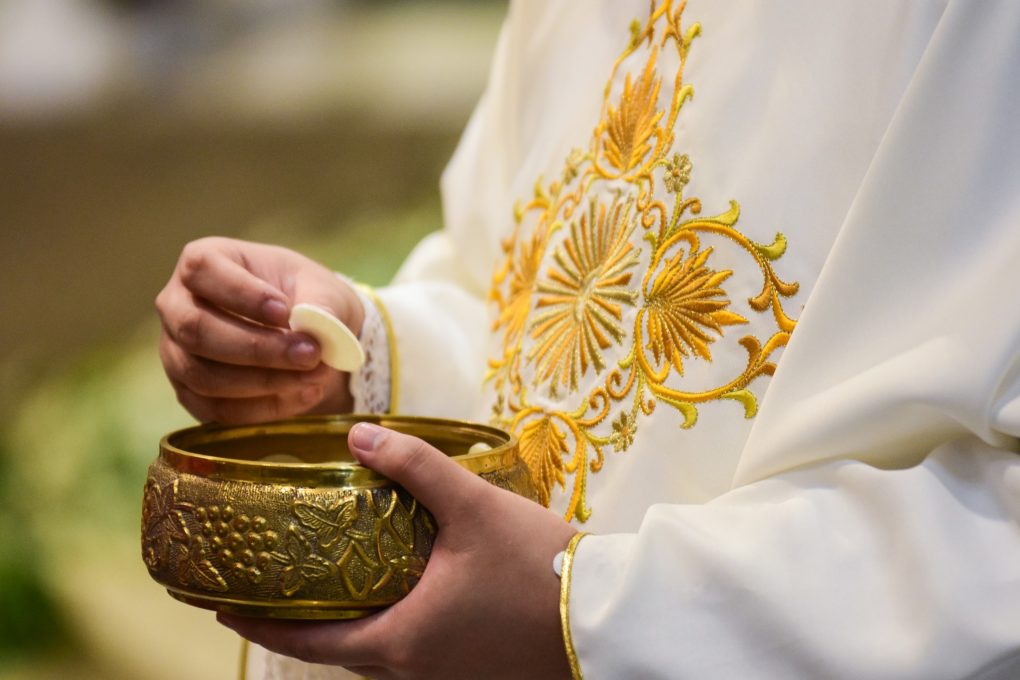
The Solemnity of Corpus Christi places before us a body. Not an idea. Not a memory. A body. Flesh. Blood. Bread. Wine. The evangelist John, in the sixth chapter, does not give us the institution narrative at the Last Supper. Instead, he gives us a long discourse in which Jesus insists: “Whoever eats my flesh and drinks my blood remains in me and I in him.” The crowd is shocked.