- Rachel Luna Peralta, Ph.D.
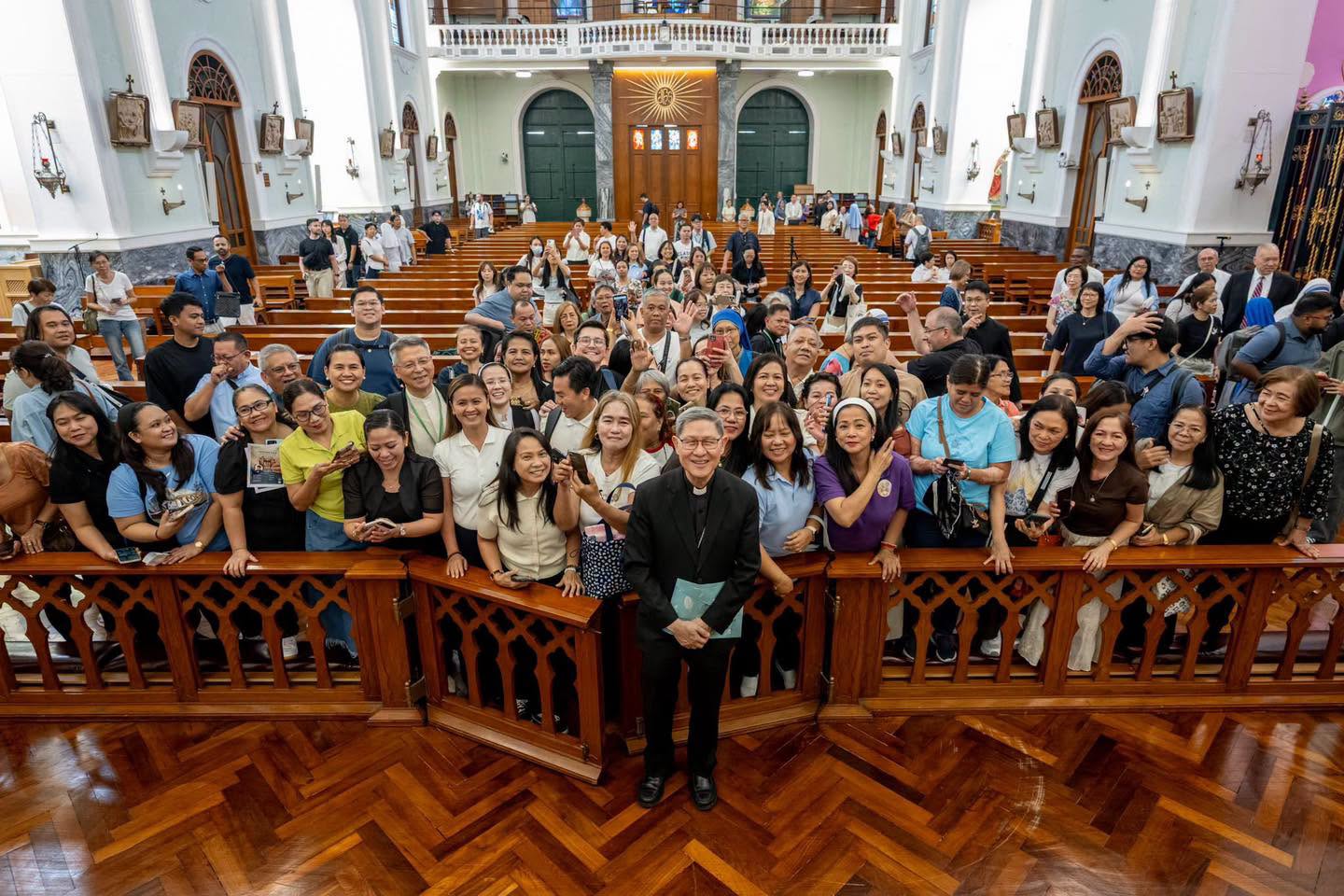
When I learned that His Eminence Cardinal Luis Antonio G. Tagle would deliver a public lecture as part of the 450th anniversary celebrations of the Diocese of Macau, I immediately registered. As a Catholic living and serving in Macau, I knew this was a rare encounter I could not and should not miss. Delivering the public lecture "Magnifica Humanitas: Synodal Ways for Evangelization in Asia" at the historic Sé Catedral on October 31, Cardinal Tagle reminded us of a simple truth: while trade routes, technology, and communication tools evolve, our basic human needs for connection and communication remain constant. Weaving together insights from Pope Leo’s encyclical Magnifica Humanitas, he explained the three identities of a synodal church: Communion, Participation, and Mission.
Communion, Participation, and Mission: Walking Together
Demystifying the word synodality, Cardinal Tagle reminded us that it simply means "walking together on the same path." He urged the Catholics in Macau and Asia to live out its three core dimensions:
Communion: Grounding his thoughts in Lumen Gentium, he contrasted true Christian unity with the ancient Tower of Babel. Babel, he noted, was built on pride, self-sufficiency, and forced uniformity—the very things that break communication apart. True communion doesn't erase our differences; it embraces them. He gently warned against allowing cultural cliques, parish rivalries, or subtle kinds of tribalism to infiltrate our local communities. “I have many horror stories about that, even among choirs. That's why the parish cannot move on. Instead of moving towards mission, the parish priest has to settle petty quarrels which takes a lot of time and energy, and in the meantime the enemy is very happy. Are the different organizations searching for the common good of the Parish or their group?” he lamented.
Participation: Cardinal Tagle underscored that the sole purpose of ecclesial authority and power is to serve God’s people, citing Magnifica Humanitas (No. 89). According to him, a truly participatory Church isn't afraid of transparency, accountability, or honest evaluation. In today's digital landscape, he stated that technology should benefit people, rather than used for profit. "In the ecclesial context the common good takes the form of a synodal approach for mission at the service of the kingdom of God, " he said.
Mission: Pointing to the First Letter of John, he emphasized that authentic evangelization comes from a place of real, lived encounter—sharing what we have personally "seen, heard, and touched" in Christ. To be a genuine witness in the digital age, he aptly said, “To be a true missionary influencer in the digital age, the influencer must first be primarily influenced by Jesus Christ and His Gospel.”
The Quiet Ache of Migration: Expanding the Family Heart
During the open forum, I had the privilege of asking Cardinal Tagle about two realities close to my heart as an Overseas Filipino Worker (OFW) and educator: how migrant faithful reconcile the quiet ache of serving a local parish abroad while missing their own families in the Philippines, and how teachers can safeguard human dignity amidst students’ over-reliance on AI. His response to the first question cut straight to the heart. Migration, he acknowledged, is rarely a luxury; it is a heavy cross born of necessity. But spiritual peace doesn't come from passive endurance, but from expanding our capacity to love. He recalled meeting a Filipina domestic helper in northern Italy who cared for two young Italian children. He narrated that every time the helper cooked for them, her mind drifted home, wondering who was feeding her own children in the Philippines. Yet she found her peace by shifting her perspective: "When I look at these two children, I tell myself I will give them the love and care my own children deserve," he quoted. "She expanded her family," Cardinal Tagle observed softly. "It doesn't solve the underlying pain, nor does it lessen her love for her children back home. But it gives her work a sacred purpose." For the thousands of migrant workers filling Macau’s pews every Sunday, his words reframed foreign service not as a sacrifice of loss, but as a grace-filled expansion of the heart.
Guarding Human Dignity in an Automated World
Turning to Catholic educators, Cardinal Tagle cautioned against over-reliance on artificial intelligence and digital devices. When parents hand iPads to crying toddlers as a quick fix, technology slowly replaces human companionship. Over time, children grow more comfortably by tapping a screen rather than relying on humans."Taking the device away later feels almost like an act of brutality to them," he warned, asking whether we are carelessly fostering a "new brand of ignorance" under the banner of technological progress.To protect real connection in our schools and homes, he offered three concrete steps for both teachers and parents:
Rethinking Parenting: Moving away from using screens as digital babysitters, focusing instead on building long-term human trust.
Supporting Parents: Offering school-led workshops during parent-teacher meetings so mothers and fathers understand AI trends rather than feeling left behind.
Pioneering Digital Pastoral Care: Creating specialized school counseling to help students navigate the loneliness and anxiety that often follow screen isolation; and for school counselors to branch out their research into this field.
He suggested, “Maybe school counselors could also begin a special area of studies. We already have some counselors to deal with children who were victims of war, the traumas of war or victims of abuse. How about a special line of counselor in counseling and helping us understand what are the effects on the mental attitude so that we would know how to handle.”
A Covenant of Presence
Cardinal Tagle’s lecture was a timely invitation to return to what matters most. True evangelization is not determined nor is dependent on algorithms or perfect methods, but it is anchored on a community in synodality. As the Diocese of Macau celebrates 450 years of faith and heritage, it steps into its next chapter with a clear path forward: to keep walking together—building a community where migrant sacrifices find comfort in an extended family, and where our schools remain sanctuaries of genuine human warmth in an increasingly automated world. For years, my weekly encounter with Cardinal Tagle has been digital, watching his reflections on “The Word Exposed” via Jesuit Communications. Listening to him and talking to him in person filled me with immense joy and gratitude – a reminder of his message that digital tools can never replace authentic personal presence. This grace-filled encounter with a shepherd whose life points directly to the ultimate Influencer – Jesus Christ, continued and culminated later that afternoon at the Macau Forum, where thousands of Catholics gathered for the historic 450th Anniversary Solemn Mass. As Cardinal Tagle presided over the Eucharist surrounded by the vibrant, multilingual local Church, the morning’s message of communion and shared mission came alive in the breaking of the bread. It is a momentous milestone I will deeply cherish as I continue my journey of faith, service, and teaching here in Macao.
(Dr. Rachel Luna Peralta, Ph.D. an Overseas Filipino Worker-OFW, is an English Lecturer and a cross-disciplinary researcher at the Macao University of Tourism. She obtained her doctoral degree from the University of Saint Joseph, Macau. She has been serving at the Our Lady of Fatima Church since 2014)