

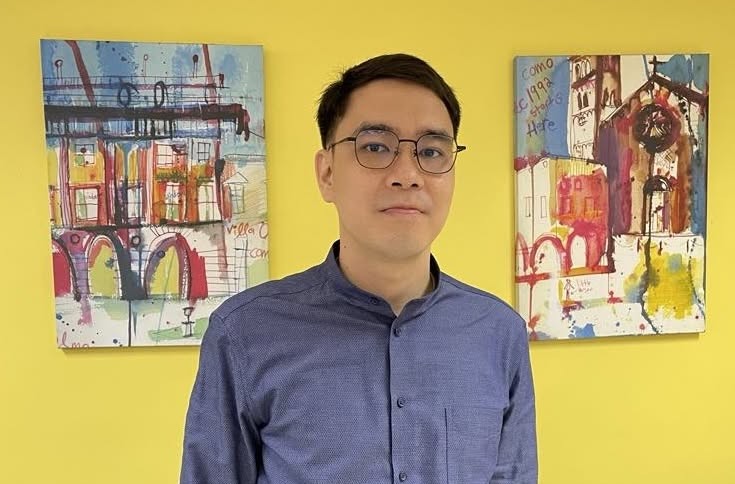
For Dominique Chua, a secondary school teacher in Macau, leaving his country and parish ministry in the Philippines didn’t mean leaving his parish mission. It meant discovering just how much bigger the mission field could be. After years of walking alongside his students, he felt the Lord calling him somewhere new: Macau. There, he saw an opportunity to bring the same model of evangelization and discipleship that he had lived out on his parish in the Philippines.
A Vocation to Mission
Dominique arrived in Macau in 2008, never intending to stay. What began as a spontaneous job application turned into a life rooted in service and community. From childhood, Dominique was immersed in Church life—altar server, lector, catechist—and that devotion only deepened abroad. In Macau, he became a pillar of the Filipino Catholic community, eventually leading the Pastoral Service Commission.
His faith matured from memorized doctrine to a lived experience of love and trust. He describes faith as “divine providence,” a constant presence that shaped his choices and sustained him through transitions. The Church became his comfort zone, and the Filipino ministries his second family. Through daily Mass, ministry work, and shared prayer, Dominique found not just belonging—but purpose.
Dominique’s journey is marked by gratitude. He calls himself “spoiled by God,” recognizing blessings even in hardship. During moments of grief, like the loss of his grandmother, it was the Church community that lifted him—offering prayers, messages, and solidarity. These small acts of kindness revealed the depth of spiritual support available to migrants far from home.
He believes God’s love knows no borders, and that service is not obligation but a response to love. His message to fellow OFWs is clear: faith is not just for Sundays—it’s a daily anchor.
A Call to Evangelize
As Dominique prayed with the story of the road to Emmaus, where the disciples’ hearts burned within them as Jesus opened the Scriptures, he recognized something similar stirring in his own heart. “That’s how my heart felt with the idea of doing a ministry with the Filipinos in Macau,” he said. “It was kind of scary. I loved my life on campus, the students I have walked with. But there was something in my heart just burning with the desire, ‘I think this is what God wants me to do.’”
Working with Filipino community is always challenging. Filipinos are highly energetics even in pastoral and parish life. They love activities that range from liturgical seminars and seasonal reflections to annual sports festivals and cultural celebrations like Migrants Day, Regional Patronal feast days to Simbang gabi ( Christmas Novena Mass) and Mahal na Araw ( Lenten and Holy week celebrations).
Despite of the challenges, he meets Dominique reflected “I just kind of knew this is what God wants me to do. This is the best ministry in the world. I find joy doing this ministry!” he said.
What excites him is the opportunity to practice what he calls “incarnational evangelization” alongside Filipino Migrant workers and people in different stages of life. And he has found people ready to respond. “They’re always hungry for the Lord — hungry for small groups, hungry for fellowship, hungry to grow in discipleship and learn what that looks like,” he said. “They’re just ready to go.”
Dominique and a good number of Filipino Catholics in Macau have become what the late Pope Francis called “smugglers of the faith.” While migration was initially for economic reasons, many OFWs have engaged in pastoral work through presence, prayer, fellowship, and participation in parish life. In countries where Catholic faith is undersung, Filipinos often witness quietly but consistently, supporting local communities with both spiritual and practical help. Through trials and the challenges of overseas life, Dominique’s story reminds us that hope is real, and grace is always within reach.
(Editor’s Note: This feature celebrates the remarkable journey of Filipinos in Macau , whose works and Ministry in the Catholic Church inspired others with courage and dedication. Through interviews, archival research, and personal anecdotes, we explore the milestones, challenges, and values that have defined their path)