
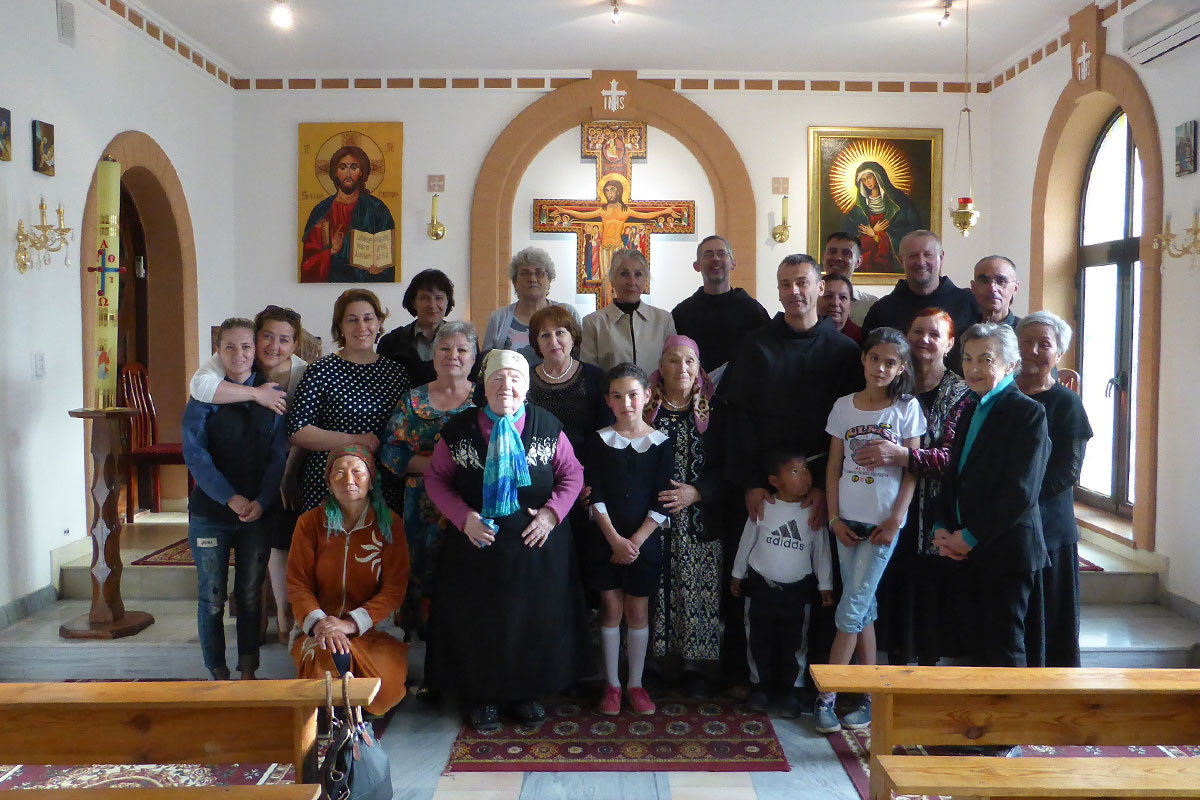
Two new parishes in a predominantly Muslim country and a small Catholic community growing silently, step by step. In Uzbekistan, the Catholic Church has a numerically small presence, but continues to take root through personal relationships, the witness of the faithful, and encounters with those seeking a place to pray and feel part of a community. “Sometimes we start a new parish with three, four, or five people. That’s how it begins, with a small seed,” Bishop Jerzy Maculewicz, OFM Conv, Franciscan and Apostolic Conventual Administrator of Uzbekistan, told Paolo Affatato, reporter of the Fides news agency. “We did as the Apostles did, as we read in the Acts of the Apostles: we started with very little, but we made a beginning, and the Lord guided our steps.”
Over the past two years, he reports, two new parishes have been established in the country: one dedicated to Divine Mercy and the other to Saint Joseph. For the bishop, these new ecclesial realities are signs of change in the country's environment. One of them is located in Angren, about 90 kilometers from the capital, Tashkent. “This new parish has only 20 faithful, two-thirds of whom are children. It is the beginning of a new ecclesial reality in a place where we were not present before. On a journey marked by small numbers, growth becomes visible over time. “I am a Polish priest, and I have been in Uzbekistan for 21 years. I can say that my history is linked to that of Saint John Paul II: the Apostolic Administration was established, and I was appointed on April 1, 2005, one day before the Pope's death. I was one of the last bishops he appointed.” When the time came to choose a saint for the Apostolic Administration, the community proposed Saint John Paul II, recalls Bishop Maculewicz, in part because there were no local saints in that region who could be chosen as patrons. When he arrived, there were five parishes, entrusted to the pastoral care of the Franciscan Friars Minor. In 1997, Saint John Paul II entrusted the Order of Friars Minor Conventual with the task of developing the structures of the Catholic Church in the country. Since then, the Church's trajectory has followed a social and institutional context that, according to the bishop, has undergone significant changes. "When I arrived, during the presidency of Islam Karimov, the situation was quite difficult for all religions, both Muslim and Christian. For example, young people and children were forbidden from attending mosques or churches," he recalls. “Under Uzbekistan’s second and current president, Shavkat Mirziyoyev, who took power in 2016, the country opened up, first to tourists and also to pilgrims. As the Catholic Church, we were there to give them the opportunity to travel more freely and without restrictions.” The opening of two new parishes in recent years, he notes, “is a concrete sign of this change.”
Legislation has been gradually moving toward greater liberalization and reduced state control over religious communities, culminating in new regulations introduced in 2021 and 2025. The most recent law establishes a distinction between state and religion, seeking to ensure that no faith can be imposed on citizens, while strengthening legal protections for religious minorities, particularly Christian communities of various denominations, in a country with an overwhelming Muslim majority. The Catholic Church in Uzbekistan has approximately 4,000 faithful in a population of 39 million, about ten priests, both diocesan and religious, and approximately 15 nuns, in addition to an equal number of catechists. The only Catholic ecclesiastical circumscription in the country is the Apostolic Administration of Uzbekistan, headquartered in the capital, Tashkent, where the Cathedral of the Sacred Heart of Jesus is located. The growth of the Church, emphasizes Bishop Maculewicz, can also be seen in the changes that have occurred over the years in the composition of its communities. “In the past, those who requested baptism usually came from families in which a member had embraced the Catholic faith. Perhaps a mother would become Catholic, either a son or a father, but we didn't have that among families.”
Today, however, the fruits of a longer journey are beginning to emerge. “There are young Catholics who have married and already have children. We have Catholic families and children who have been Catholic from an early age. In the past, there were very few.” It is a gradual transformation that the bishop observes with gratitude. “Over the past 20 years I have seen the journey of this Church. The numbers are not large, but there are personal contacts, relationships and individual testimonies. We see that each person who approaches the Church has received a personal calling from God.”
Every year, the community accompanies new candidates who are preparing for baptism. During the Easter Vigil of 2026, about ten people, including children, were baptized in Tashkent. Adults go through a careful period of preparation. “We prepare people for baptism through a journey that lasts a year and a half. There are also faithful who have already been baptized in other Christian Churches.” In these cases, we accompany them in their entry into the Catholic Church through a profession of faith, recognizing the validity of the baptism they have already received.”