
Dear Father L.
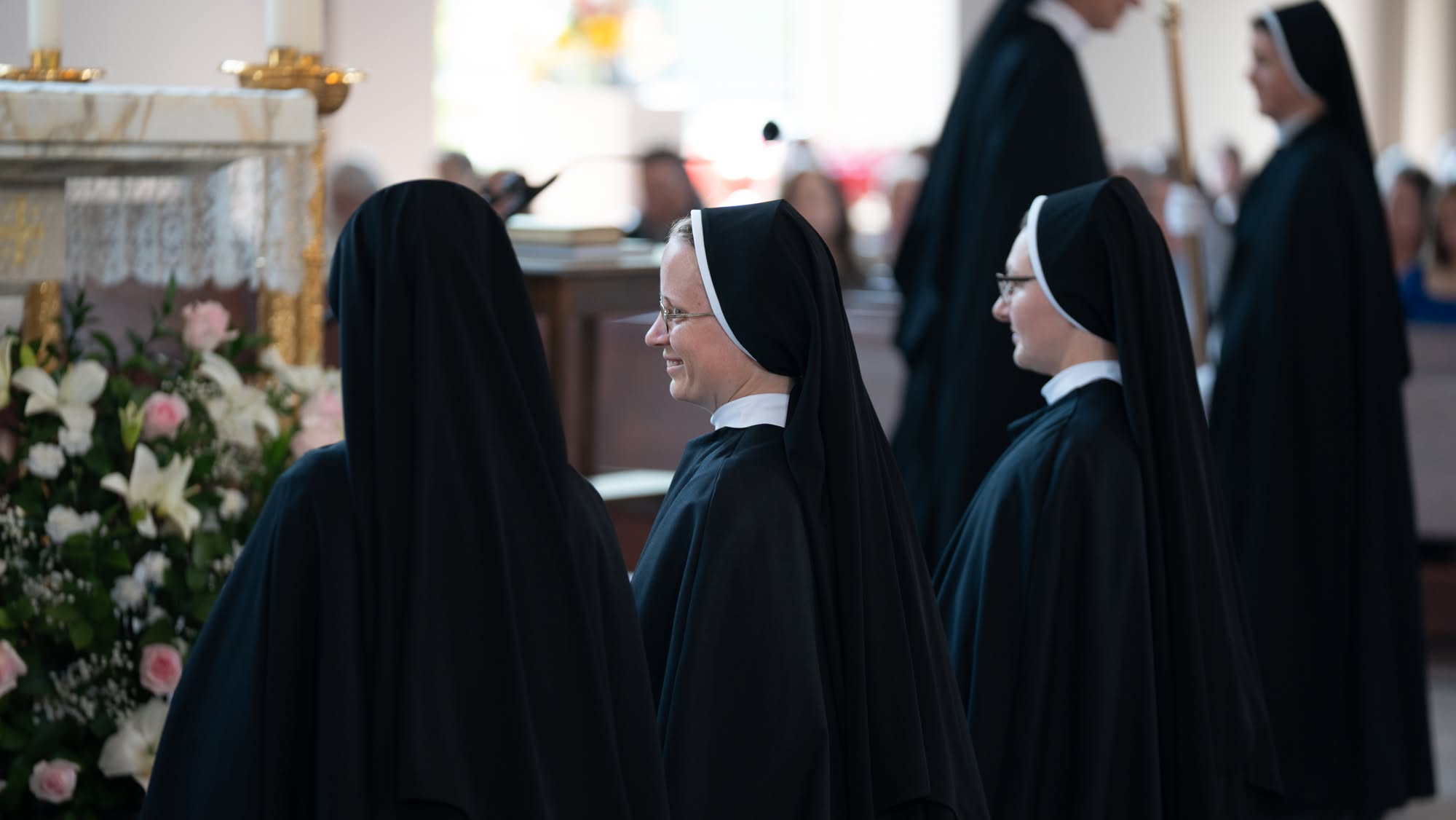
My friend entered the convent and recently I was invited to her profession and donning of her religious habit. As I was seated in front facing the altar , I was privileged to witness the entire ceremony. It was indeed very solemn and touching for me. I was however enthralled with the part of the ceremony where the bishop cut a portion of the hair of the nuns. Why is this, Father? Why Is a nun’s hair cut during religious profession or consecration?
A curious young woman
Dear Curious Young Woman,
In some religious communities, a woman’s hair is cut or shaved as part of a traditional rite associated with religious profession or consecration. This practice is known as "tonsure" in certain historical and religious contexts. The cutting of the hair can symbolize the woman’s renunciation of worldly vanity, her willingness to surrender her life to God, and her commitment to a life of prayer, humility, and service. It may also express a break with her former way of life as she embraces her religious vocation. The meaning of the gesture depends on the particular religious institute and its approved customs.
The vow of poverty is a significant aspect of religious life, and nuns cutting their hair is a way to demonstrate their commitment to this vow. It is an act of renouncement of vanity and a way to show that one’s dignity is not based on physical appearance. In addition to the vow of poverty, nuns cutting or shaving their hair can also represent the vow of obedience to God. By submitting to the religious order’s rules and cutting their hair, nuns demonstrate their submission to God’s will. As mentioned, it is worth noting that not all nuns are required to cut or shave their hair. Some religious orders allow nuns to keep their hair long, while others require nuns to cut their hair only once they have taken their final vows. Ultimately, the decision to cut or shave one’s hair is up to the individual nun and their religious order’s rules.
We need to emphasise here that in the Catholic Church, cutting or shaving a woman’s hair is "not a universal requirement for becoming a nun or making religious profession". Many religious sisters retain their natural hair and wear a veil as a sign of their consecration and religious identity. Other communities follow distinctive traditions that reflect their history and spirituality.
Religious profession itself is much more than an outward change in appearance. Through the public profession of the evangelical counsels of poverty, chastity, and obedience, a woman commits herself to follow Christ in accordance with the rule and constitutions of her religious institute. The outward sign of cutting the hair, where practiced, expresses this deeper interior commitment.
Therefore, when a nun’s hair is cut during a traditional religious rite, it symbolizes her dedication to God and her embrace of consecrated life. But the gesture is a custom of certain communities, not a requirement imposed on every Catholic nun.
Sincerely,
Father L.
Letters are welcome at: OClarimEnglish2022@gmail.com